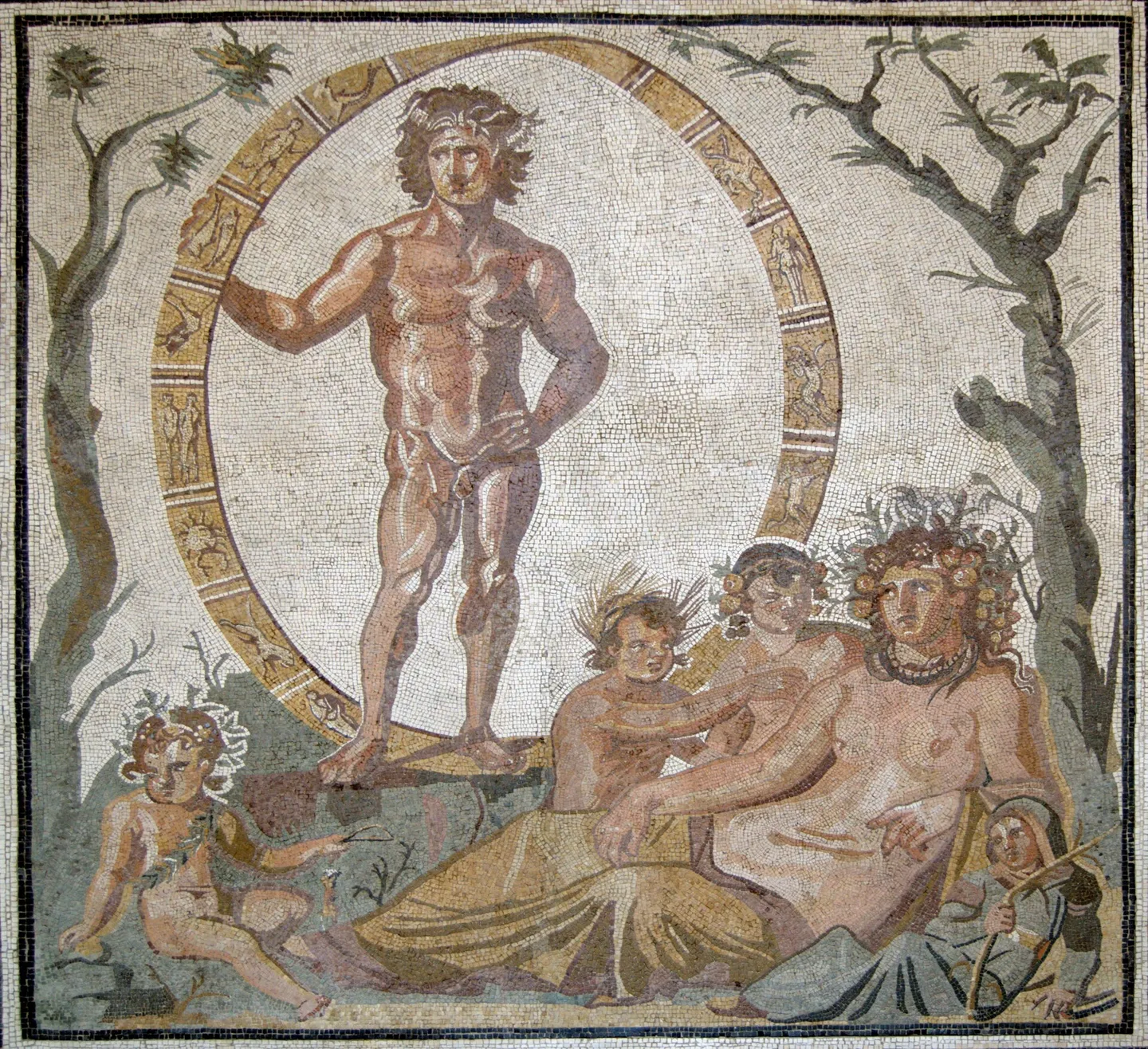
Many chemical elements take their names from mythology: Greek, Roman, and Norse gods, goddesses, and Titans. Some honor a deity directly; others are named after a planet or asteroid that itself carries a mythological name. Together they connect the periodic table to thousands of years of human storytelling and reveal the creative spirit of the scientists who named them.
Greek and Roman Mythology
The majority of mythologically named elements draw from classical Greek and Roman traditions:
Named after the Titans, powerful elder gods who ruled before the Olympians. Titanium is fittingly strong: as strong as steel but 45% lighter.
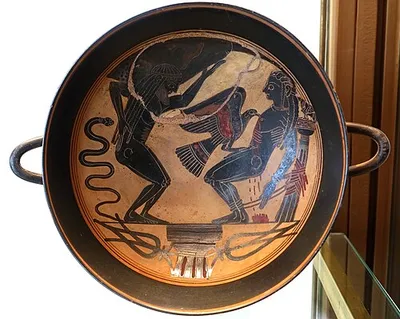
Named after Prometheus, who stole fire from the gods and gave it to humanity. All isotopes of promethium are radioactive.
Wikimedia Commons · Public domain
Named after Tantalus, condemned in Hades to stand in water that receded when he tried to drink. Tantalum resists acid corrosion: acids cannot 'reach' it, just as the water eluded Tantalus.
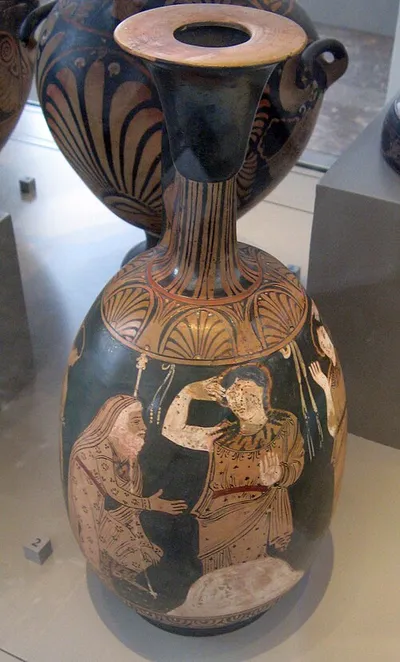
Named after Niobe, daughter of Tantalus in Greek mythology. Niobium is always found alongside tantalum in nature, mirroring the family bond.
Marcus Cyron · CC BY-SA 3.0
Named after Ceres, the Roman goddess of agriculture, and the dwarf planet Ceres, which was discovered two years before the element.
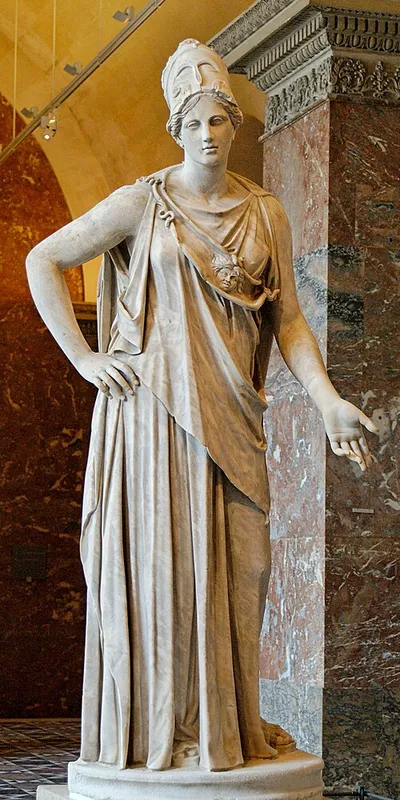
Named after the asteroid Pallas, which was itself named for Athena's epithet Pallas Athena.
Wikimedia Commons · Public domain
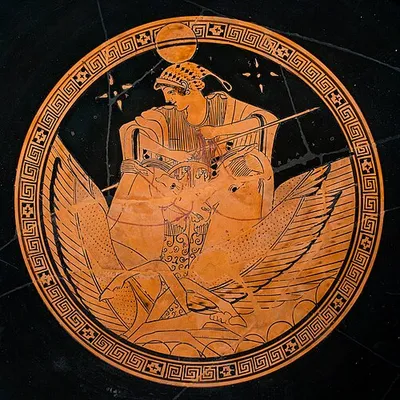
Named after Selene, the Greek goddess of the Moon. Discovered by Jöns Jacob Berzelius in 1817.
Wikimedia Commons · Public domain
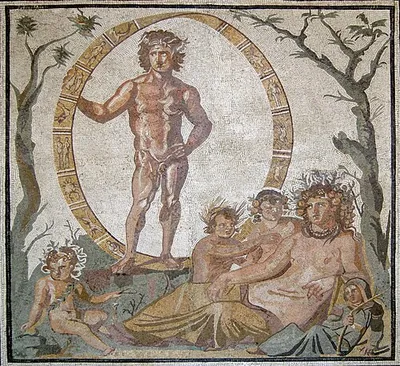
Named after Tellus, the Roman goddess of Earth (Terra). Selenium and tellurium were named as a pair: Moon and Earth.
Wikimedia Commons · Public domain
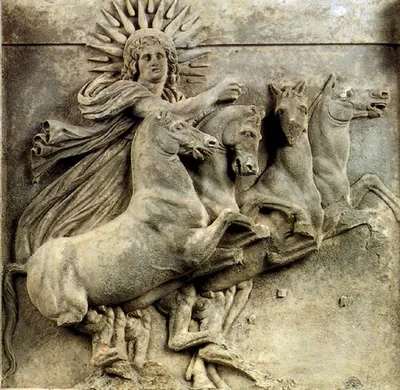
Named after Helios, the Greek god of the Sun. Helium was first detected in the solar spectrum during a solar eclipse in 1868, before it was found on Earth.
Wikimedia Commons · Public domain
Named after Iris, the Greek goddess of the rainbow and messenger of the gods, a nod to the strikingly varied colors of iridium's salts. Iridium is also one of the densest and most corrosion-resistant elements known.
Norse Mythology
Two elements draw their names from Norse mythology:

Named after Thor, the Norse god of thunder. Thorium was discovered in 1829 by Jöns Jacob Berzelius and is mildly radioactive.
Wikimedia Commons · Public domain

Named after Vanadis, an alternate name for Freyja, the Norse goddess of beauty. The name reflects vanadium's beautifully colored compounds.
Wikimedia Commons · Public domain
Planetary Names from Mythology
These three elements follow the same sequence as the planets beyond Saturn: Uranus, Neptune, Pluto, mirroring the pattern of increasing atomic number in the periodic table.
Named after Uranus, the Greek god of the sky and the planet discovered in 1781, just eight years before uranium was isolated.

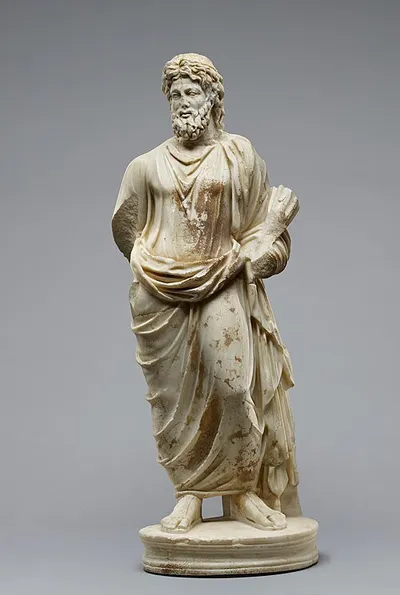
Named after Pluto, the Roman god of the underworld and the dwarf planet. Plutonium follows neptunium, completing the planetary naming pattern.
J. Paul Getty Museum · CC0
Mercury: The Dual Name
Mercury stands alone as an element with both a mythological name and a symbol from an entirely different linguistic tradition: