Flame tests are a quick analytical method for identifying metal ions by the characteristic color they produce when heated in a flame. When atoms absorb thermal energy, their electrons jump to higher energy levels. As these excited electrons drop back to their ground state, they emit light at specific wavelengths, producing the distinctive colors we observe.
Common Flame Test Colors
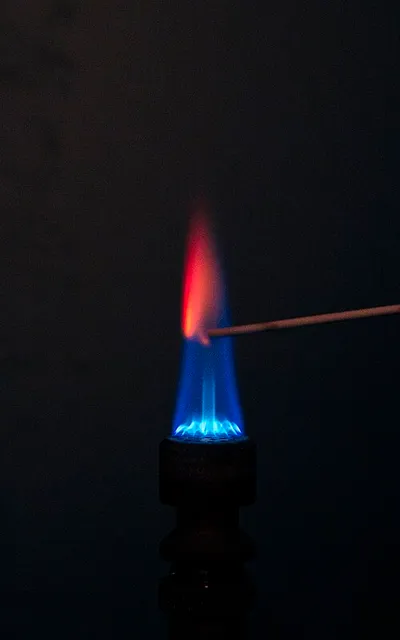
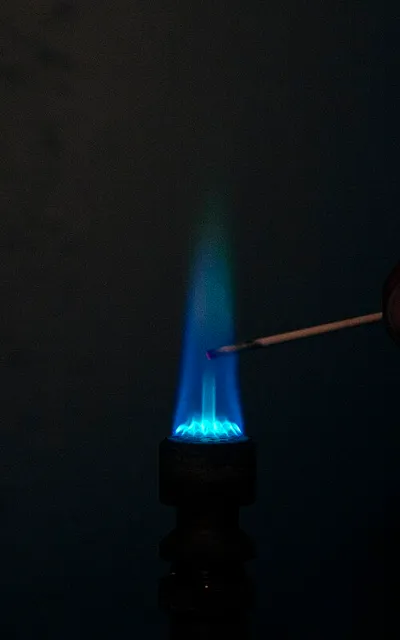
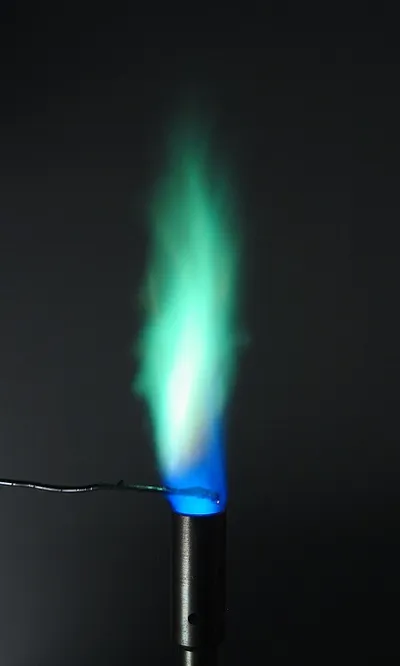
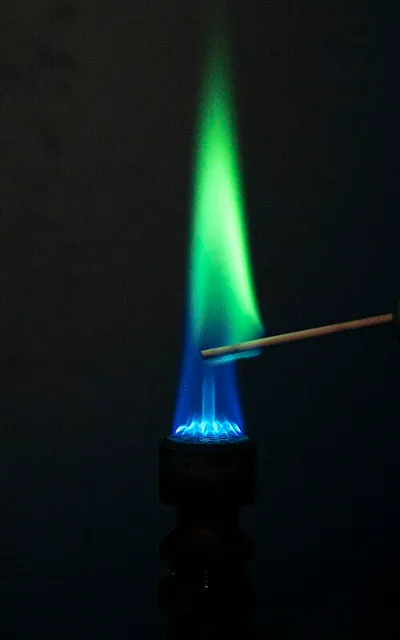
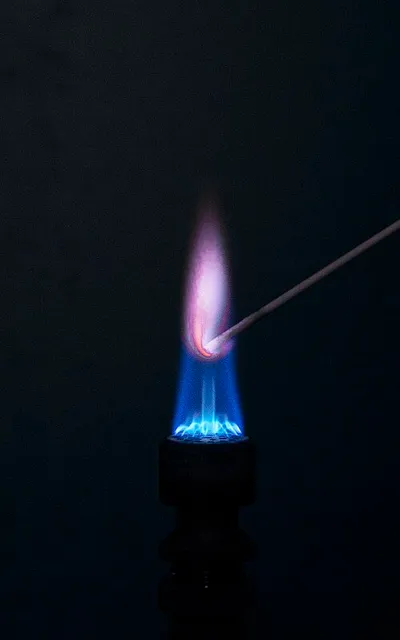
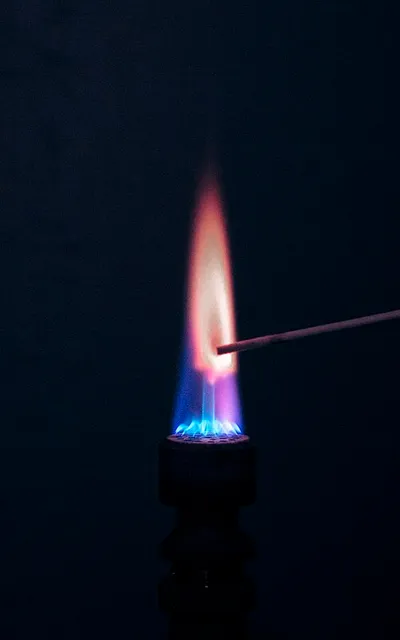
The following metal ions produce characteristic colors when introduced into a Bunsen burner flame:
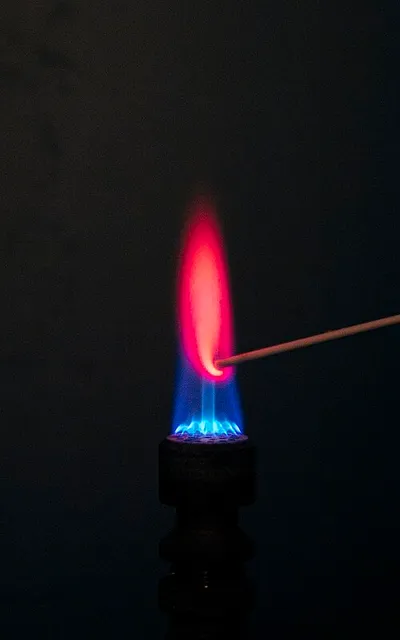
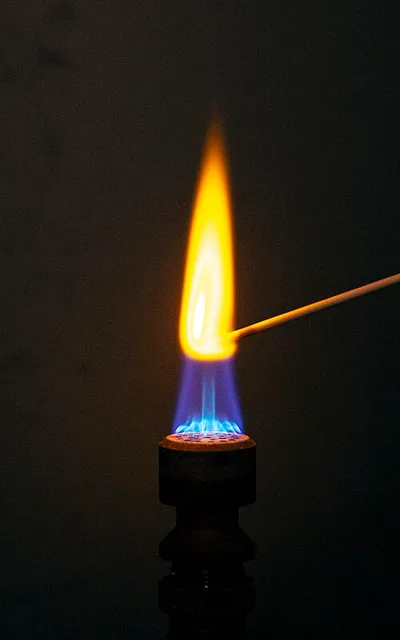
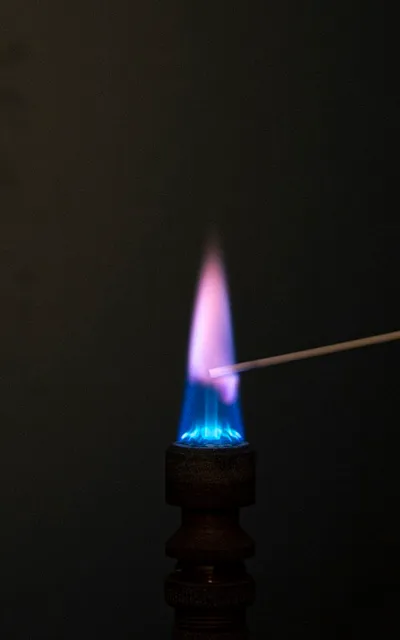
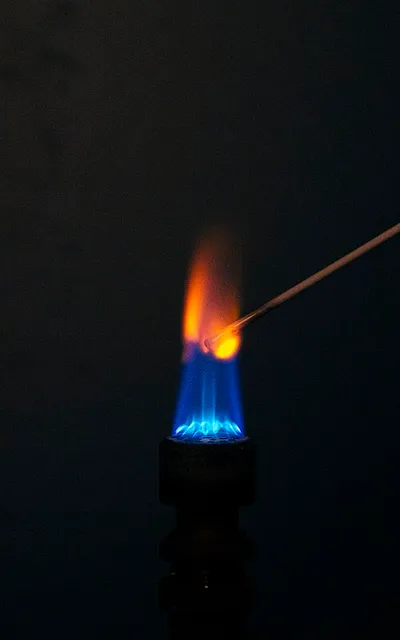
How Flame Tests Work
Flame tests rely on the quantized energy levels of electrons in atoms. When an atom is heated, its electrons absorb energy and transition to higher-energy orbitals (excited states). These excited states are unstable, so electrons quickly fall back to lower energy levels, releasing the absorbed energy as photons of light. The wavelength, and therefore the color, of the emitted light is determined by the energy difference between the two levels, which is unique to each element. This is the same principle behind the Bohr model of the atom and the basis of emission spectroscopy.
Tips for Accurate Flame Tests
To obtain reliable results: clean a nichrome or platinum wire loop by dipping it in concentrated hydrochloric acid (HCl) and holding it in the hottest part of the Bunsen flame until no color is produced. Then dip the clean wire into the sample and return it to the flame. Sodium contamination is the most common problem. Even trace amounts produce an intense yellow that masks other colors. Viewing the flame through cobalt blue glass absorbs the sodium yellow, making it easier to identify potassium's lilac or other subtle colors beneath.