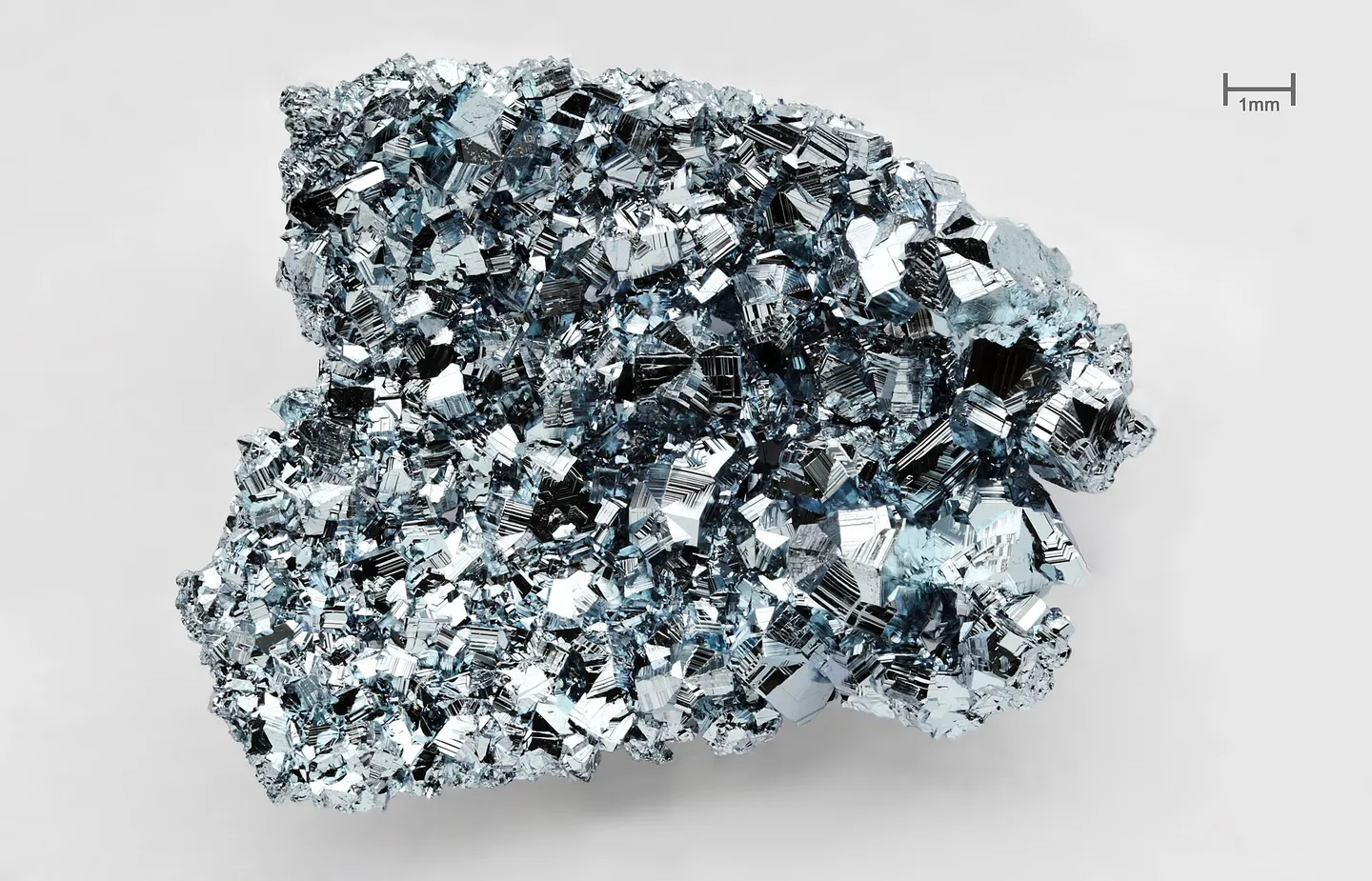
The periodic table spans an enormous range of properties. Hydrogen, the lightest element, makes up 75% of all matter in the universe, while Oganesson, the heaviest, has only ever existed as a handful of atoms for fractions of a second.
"Heaviest" can mean two different things in chemistry: highest atomic mass (the mass of atoms) or highest density (mass per unit volume). Let's explore both.
Heaviest by Atomic Mass
Atomic mass increases with atomic number, as heavier elements contain more protons and neutrons:
Atomic mass: [294]. The heaviest element by atomic mass. Only 5 atoms have ever been observed.
Atomic mass: [294]. Exists for only milliseconds.
Atomic mass: [293]. Superheavy and extremely unstable.
Atomic mass: [289]. Synthesized first in 2003.
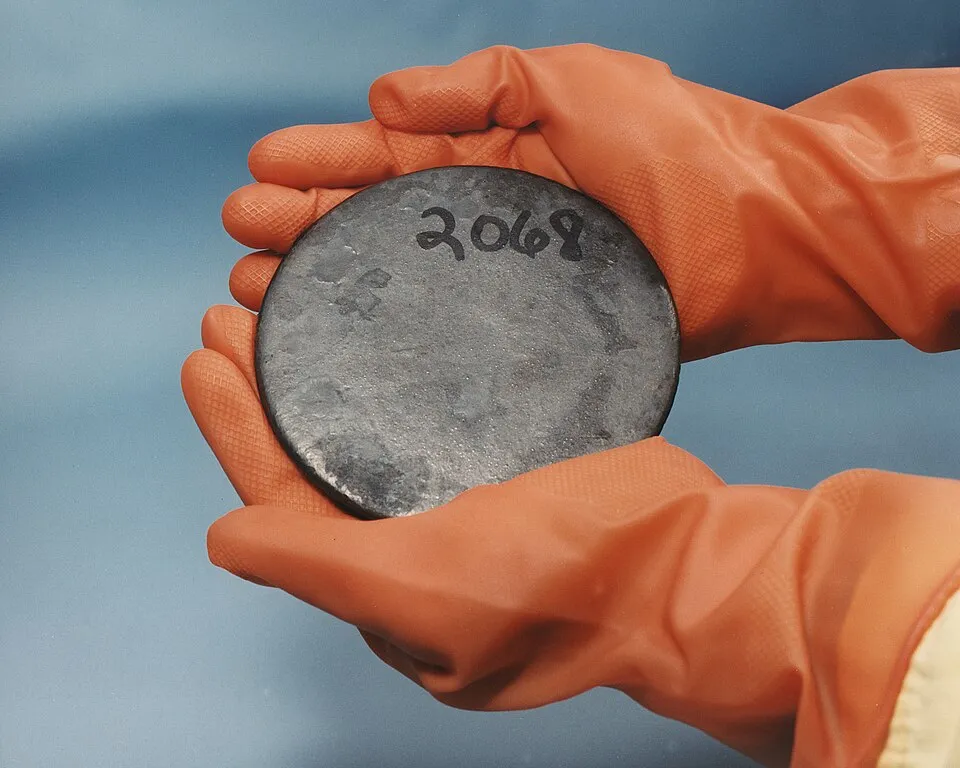
Atomic mass: 238.03. The heaviest naturally abundant element.
Wikimedia Commons · Public domain
Lightest by Atomic Mass
The lightest elements were the first to form after the Big Bang:

Atomic mass: 1.008 u. The lightest and most abundant element in the universe (75% of all baryonic matter).
Alchemist-hp · Free Art License

Atomic mass: 4.003 u. The second lightest element. So light it escapes Earth's gravity. Earth's helium comes from radioactive decay underground.
René Anderes · CC BY-SA 4.0
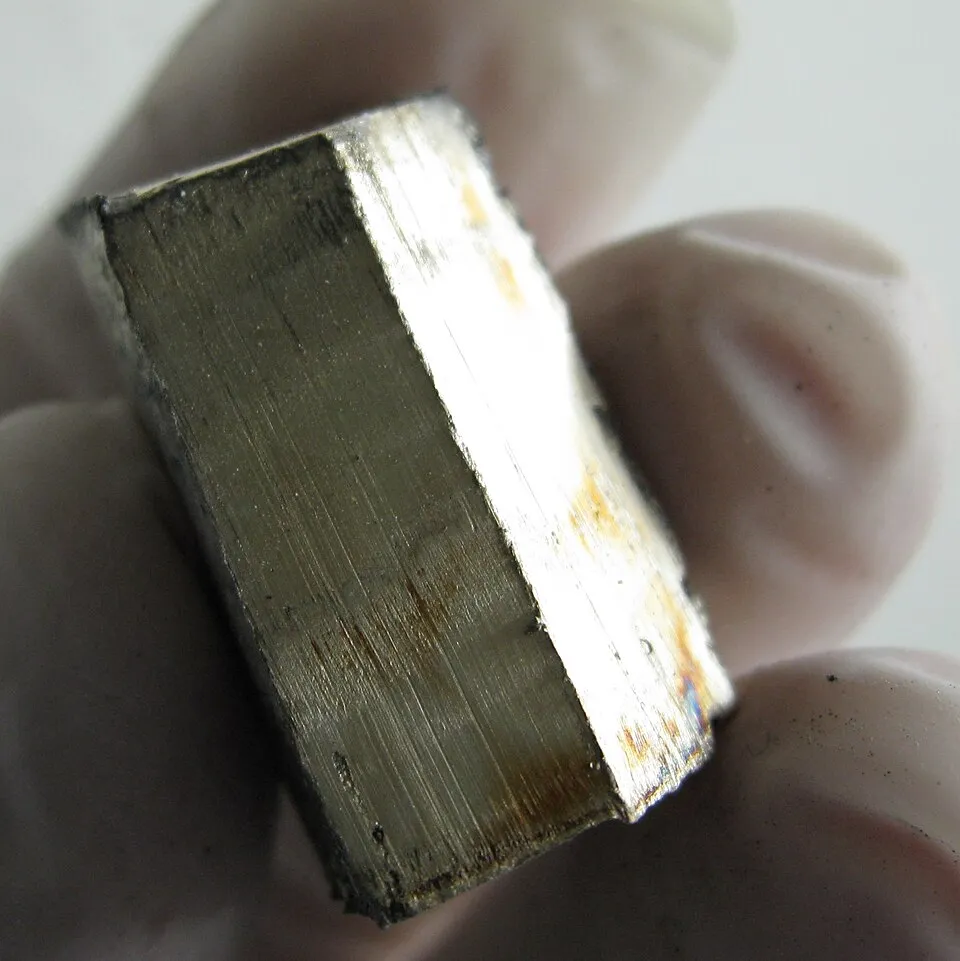
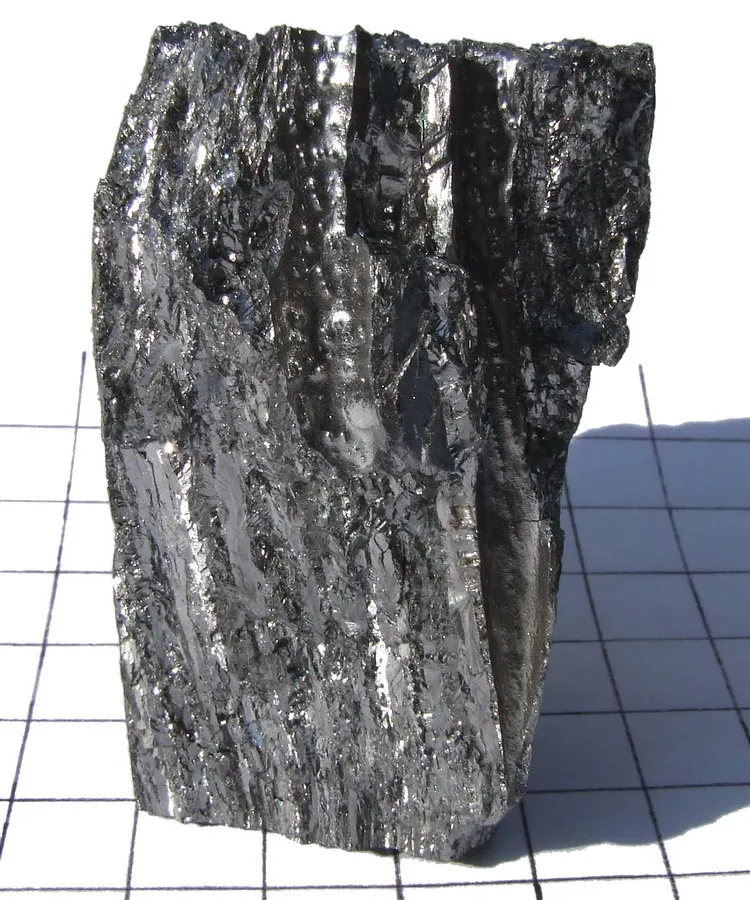
Atomic mass: 9.012 u. A lightweight metal used in aerospace applications.
Alchemist-hp · CC BY-SA 3.0
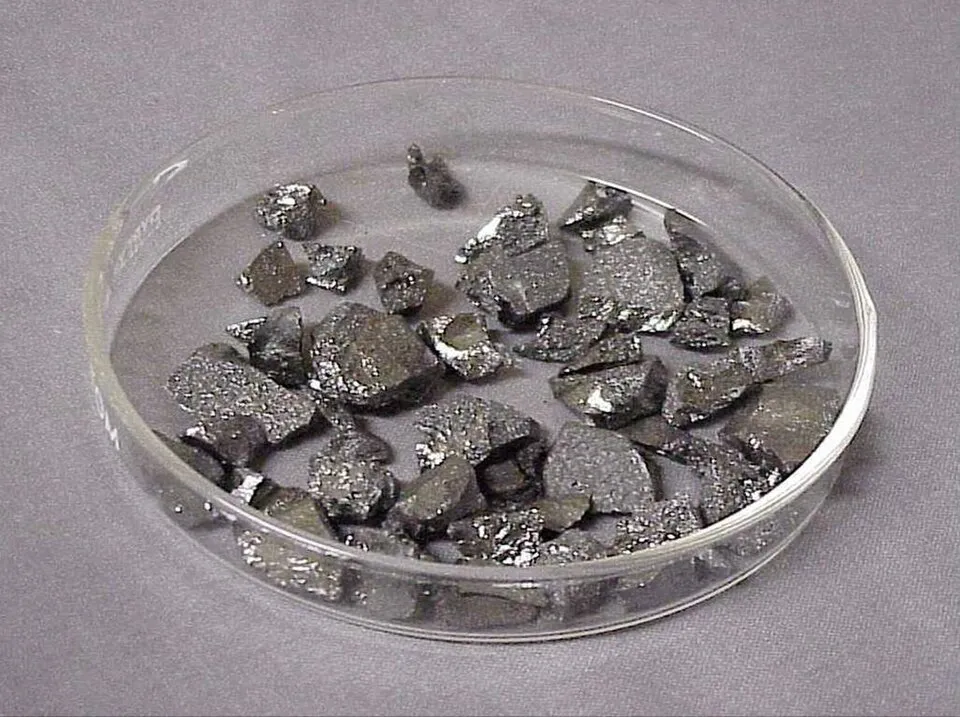
Atomic mass: 10.81 u. A metalloid used in fiberglass and detergents.
James L Marshall · CC BY-SA 3.0
Densest Elements (by Volume)
Density depends on both atomic mass and how tightly atoms pack together:
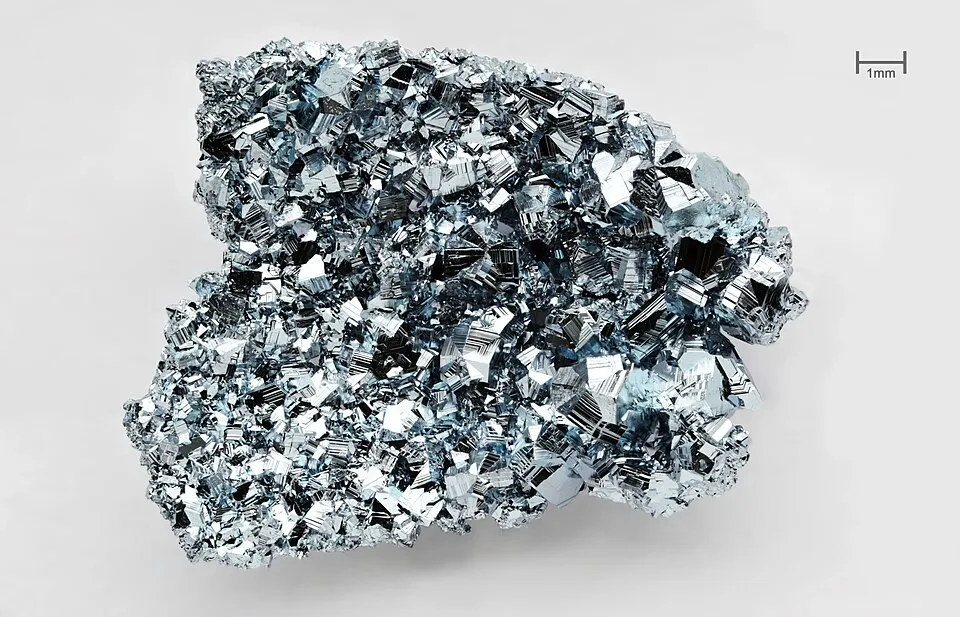
Density: 22.59 g/cm³. The densest known element: a cubic foot weighs about 1,410 pounds (640 kg).
Alchemist-hp · Free Art License
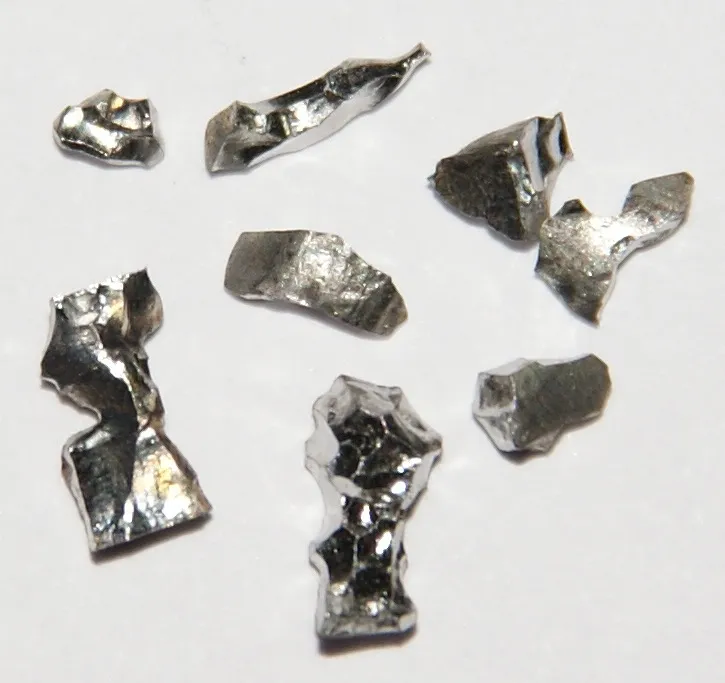
Density: 22.56 g/cm³. Nearly tied with osmium for densest element. Extremely hard and corrosion-resistant.
Hi-Res Images of Chemical Elements · CC BY 3.0
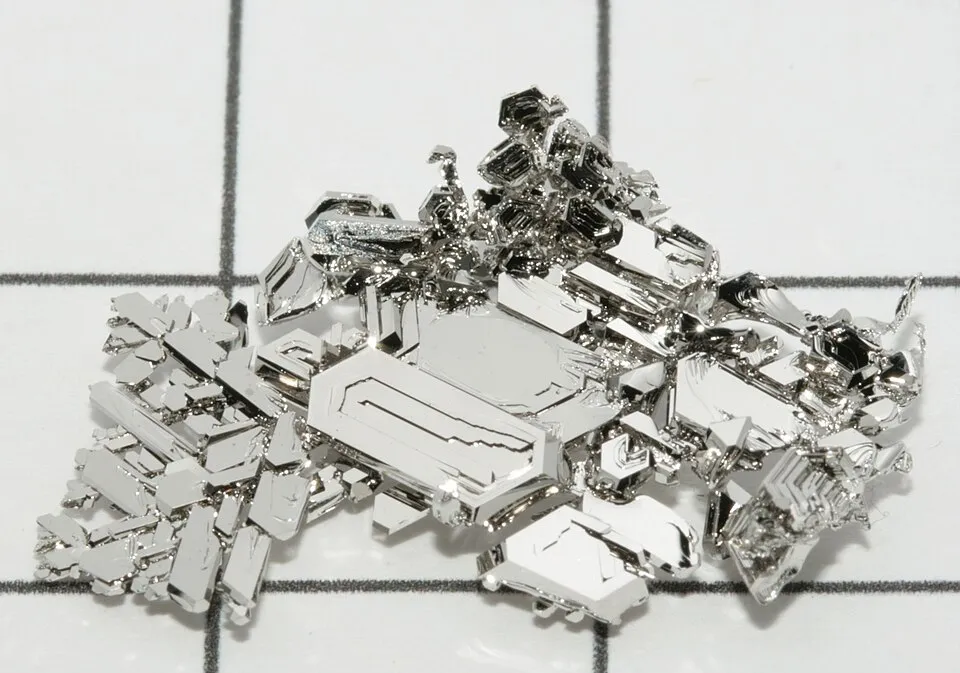
Density: 21.45 g/cm³. A dense precious metal widely used in catalytic converters.
Periodictableru · CC BY 3.0
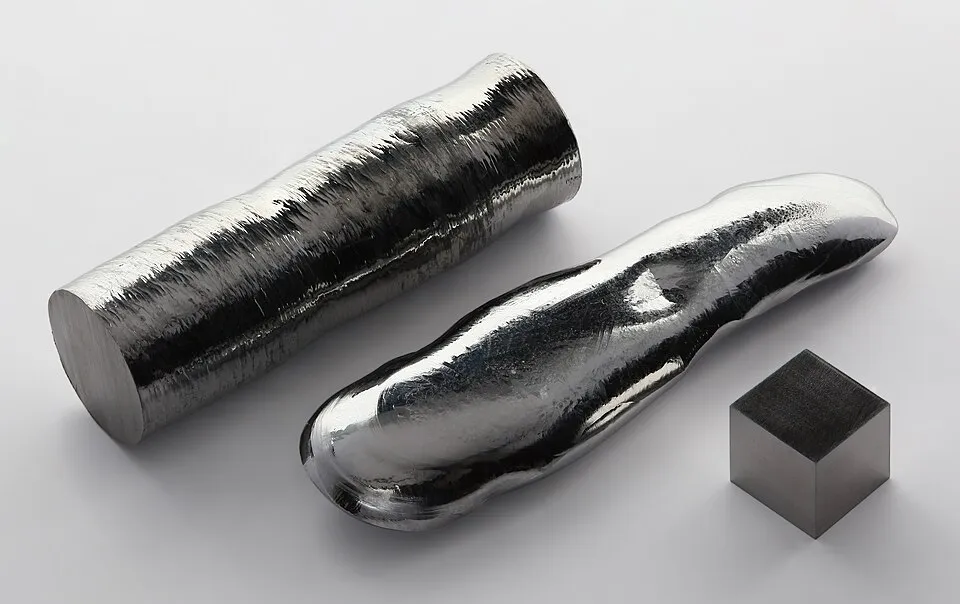
Density: 21.02 g/cm³. Has the third-highest melting point of all elements.
Alchemist-hp · Free Art License
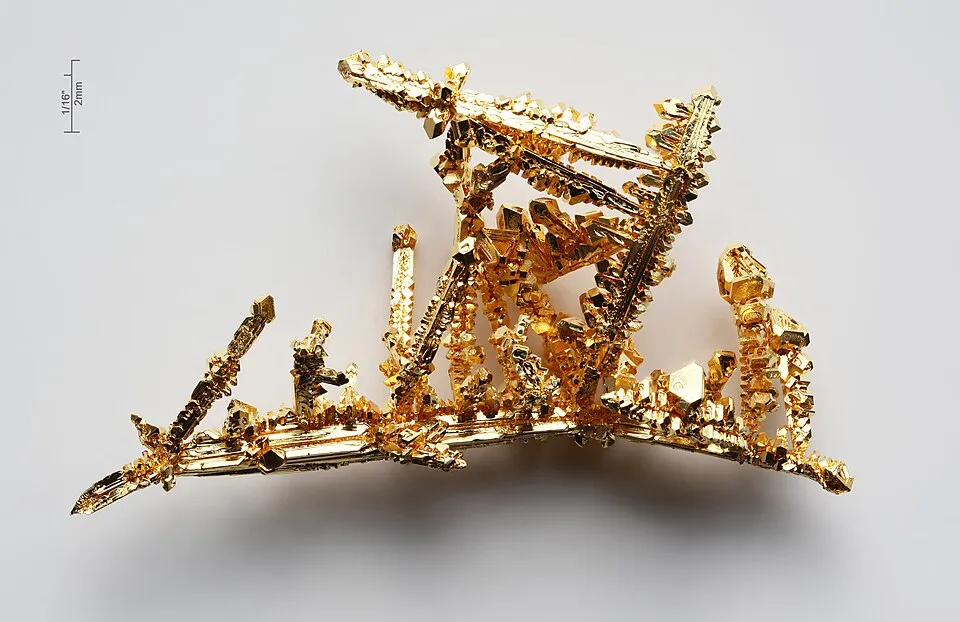
Density: 19.30 g/cm³. About twice as dense as lead. A gold bar (400 troy oz) weighs 12.4 kg.
Alchemist-hp · CC BY-SA 3.0
Least Dense Elements
The least dense elements are all gases under standard conditions, except lithium:
Density: 0.00008988 g/cm³ (gas). By far the least dense element.
Alchemist-hp · Free Art License
Density: 0.0001786 g/cm³ (gas). Used in balloons and airships because of its low density and non-flammability.
René Anderes · CC BY-SA 4.0